

Bill Murray’s Phil Connors, in Groundhog Day, wakes into the same February 2nd until, after enough iterations, he learns French poetry, the piano, and how not to be a jerk, and is finally allowed to move on. The premise is consoling: get good enough, and you graduate. The food-policy world has been operating on a similar premise since at least 2008. Each new shock is treated as an instructive replay.
But we are not graduating. The Iran war’s food shock looks quite similar to Ukraine’s. Urea up more than fifty percent. Phosphate prices rising sharply. The Strait of Hormuz a “chokepoint for global food,” as the Black Sea was. And as in 2022, the bill will be paid in hunger and malnutrition. Another crisis, another wake-up call.
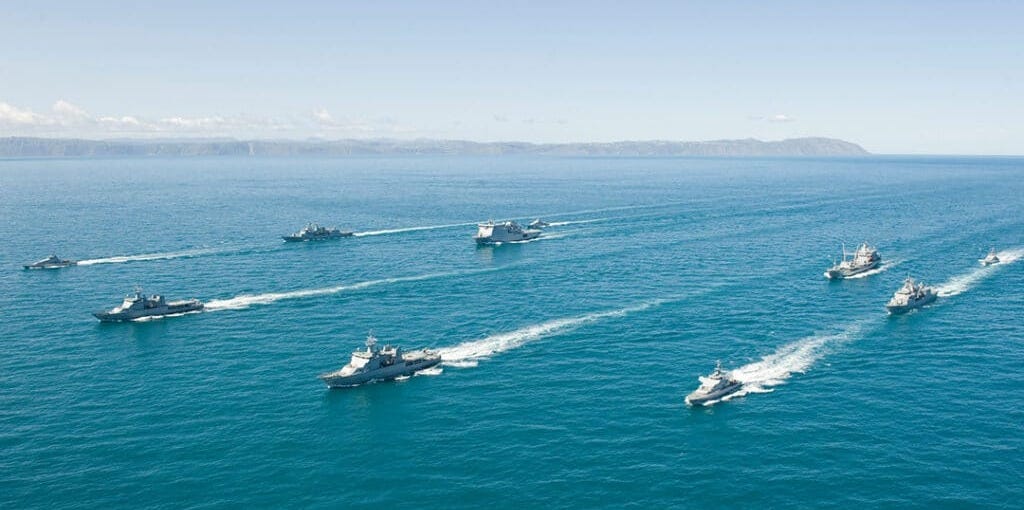
Since the U.S.-Israeli strikes of February 28, traffic through the Strait of Hormuz has fallen from roughly 130 ships a day to a trickle – often in the single digits, and recently around a dozen – with some vessels paying two million dollars to Iran for the privilege. Through that channel moves, in normal times, a third of the world’s seaborne urea, half of seaborne sulphur, a quarter of seaborne ammonia, a fifth of liquefied natural gas. Major nitrogen and sulphur producers in Qatar and Bahrain have declared force majeure. Brazil’s urea imports are already a third lower than last year’s. India approaches its main monsoon planting window — when fertilizer demand peaks — with supplies suddenly uncertain.
What follows, in the standard arc, is the familiar prescription: modern agriculture is hooked on fossil fuels and we should unhook it. Accelerate agroecology and genuinely regenerative practices (not greenwashing around the concept). Diversify diets. Build domestic input capacity. Build resilience.
And that is the heart of the problem. The diagnosis is mature. For those of us calling for change, the remedies are familiar. And yet the loop turns again.

Better arguments and refined models are not what is missing. Phil Connors escapes February 2nd by becoming a better Phil Connors. But the food system will not escape its loop by becoming a better-explained food system. What the loop is made of is power.
Consider what has actually happened in the four years since the last “wake-up call.” Russian fertilizer exports got bigger. Saudi Aramco, ADNOC, and QatarEnergy have moved further down the hydrocarbon value chain, using state-backed surpluses to vertically integrate into ammonia, urea, and sulphur — the chemical foundations of modern agriculture. ADNOC’s Fertiglobe today claims to be the world’s largest seaborne exporter of urea and ammonia, and quietly runs a controlling share of Egypt’s nitrogen capacity besides. Dubai’s Jebel Ali, the world’s largest human-made harbor, is among the top food re-export hubs on the planet. The grain trade — ABCD plus COFCO — grew more concentrated.
These are not new patterns. Producers of fossil fuels have been producers of fertilizers for decades; operators of ports have long doubled as brokers of food. What is new is only the price of the disruption when their fragility is exposed. The political pattern matches the corporate one. In Brussels, the EU’s Sustainable Use Regulation was withdrawn under farm lobbies and industry pressure; the Farm to Fork strategy was steadily weakened in successive negotiations; the Carbon Border Adjustment came under sustained pressure to exempt fertilizers the moment fertilizers became politically costly. At recent COPs, agribusiness delegations have grown large enough to overshadow many public-interest and small-farmer voices. The same firms whose pricing power makes the system fragile are the firms whose lobbying ensures it stays that way. “Feeding the world,” a phrase that works very well for those who repeat it, is invoked to defend the very inputs that make the world less feedable.
The transition many of us recommend does not happen because that transition costs the people with the power to stop it. That is the fact the conversation keeps stepping around.
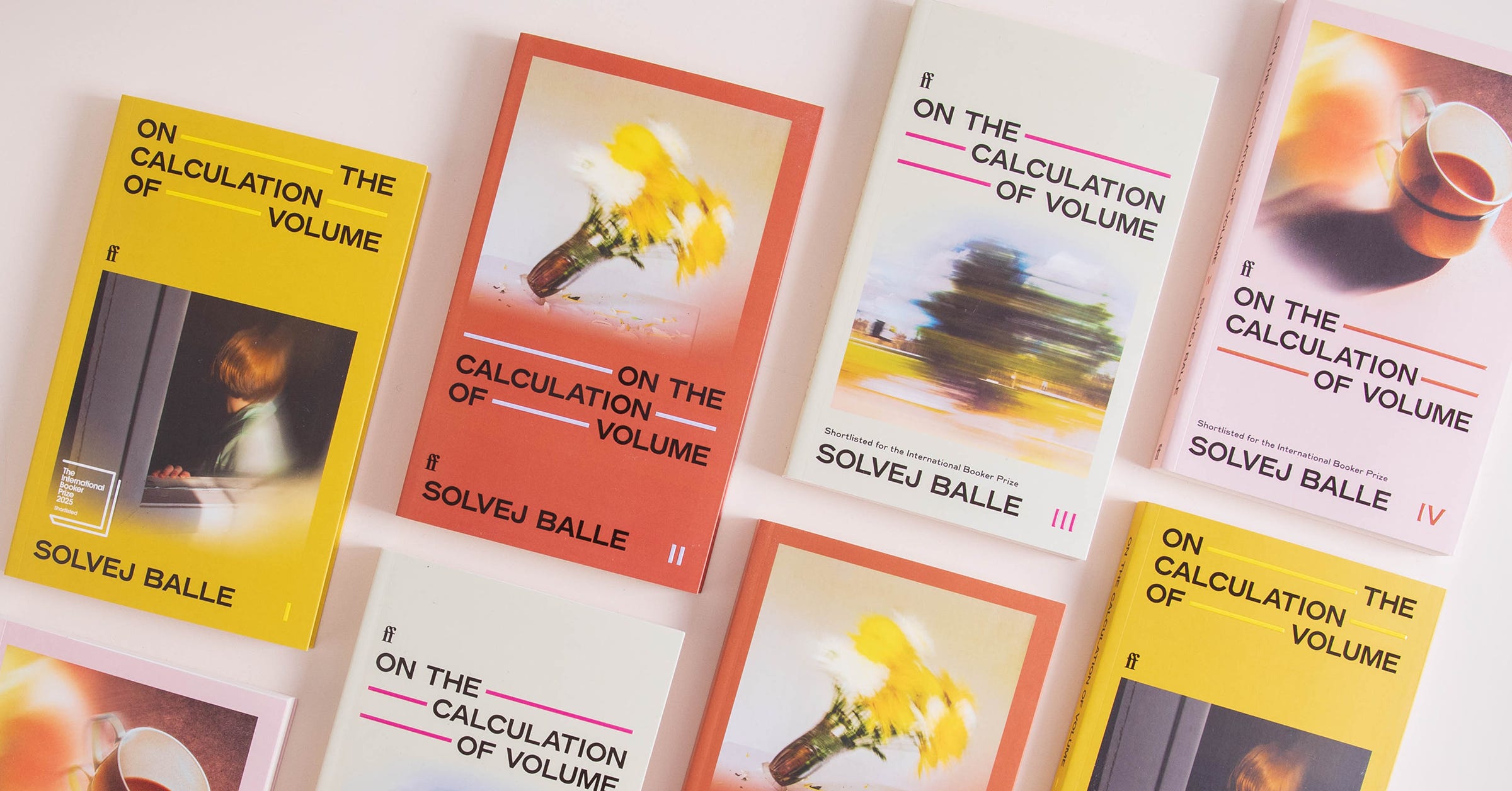
I have been reading, alongside the war, Solvej Balle’s On the Calculation of Volume — the four volumes published so far in English from a seven-book sequence. Its protagonist, Tara Selter, is trapped not on February 2nd but on November 18th. Unlike Phil Connors, she does not improve her way out. There is no piano lesson, no romantic reckoning that earns her release; whether she escapes at all is a question not yet settled. What they offer instead is something Hollywood didn’t with Groundhog Day: slow, existential reflections on seasons, on routines and monotony, on our abusive consumption of resources, on the evolution of relationships, loves, and needs.
That, it strikes me, is the more honest analogy for the food crisis we keep waking into. We are not Phil Connors, sharpened by each pass and on the way to release. We are closer to Tara Selter — slowly admitting that the loop is not a problem that better arguments can solve, but a structure to be confronted: a wicked arrangement of interests, dependencies, institutions, and narratives that keeps returning us to the same place. Not concentration alone, not lobbying alone, but the deeper architecture of power.
What ends this structural loop is the redistribution of power. Antitrust, with teeth. Real curbs on industry presence inside the multilateral processes — at COPs, at the WTO. Reclaiming food itself as matter of public responsibility, rather than leaving them to the firms that profit from fragility. Public investment that builds alternatives instead of feeding old power. Land, seed, and credit sovereignty for the farmers who actually grow the food. None of this is “win-win”; all of it is somebody losing. Which is why none of it happens until enough other people — finance ministers, labor, social movements, voters, even the parts of the private sector that have grasped where this is going — show up at the table where it would.
Somewhere right now, an analyst is opening the document called Wake-Up Call (Final, Revised 2022 2026) and beginning to type. The diagnosis will be excellent. Whether anything moves between this iteration of the loop and the next depends on something that diagnosis cannot supply: enough of us, in enough places, willing to address the elephant at the table. Until then, February 2nd.