
Public Restaurants?
Why the State Needs to Be at the Table

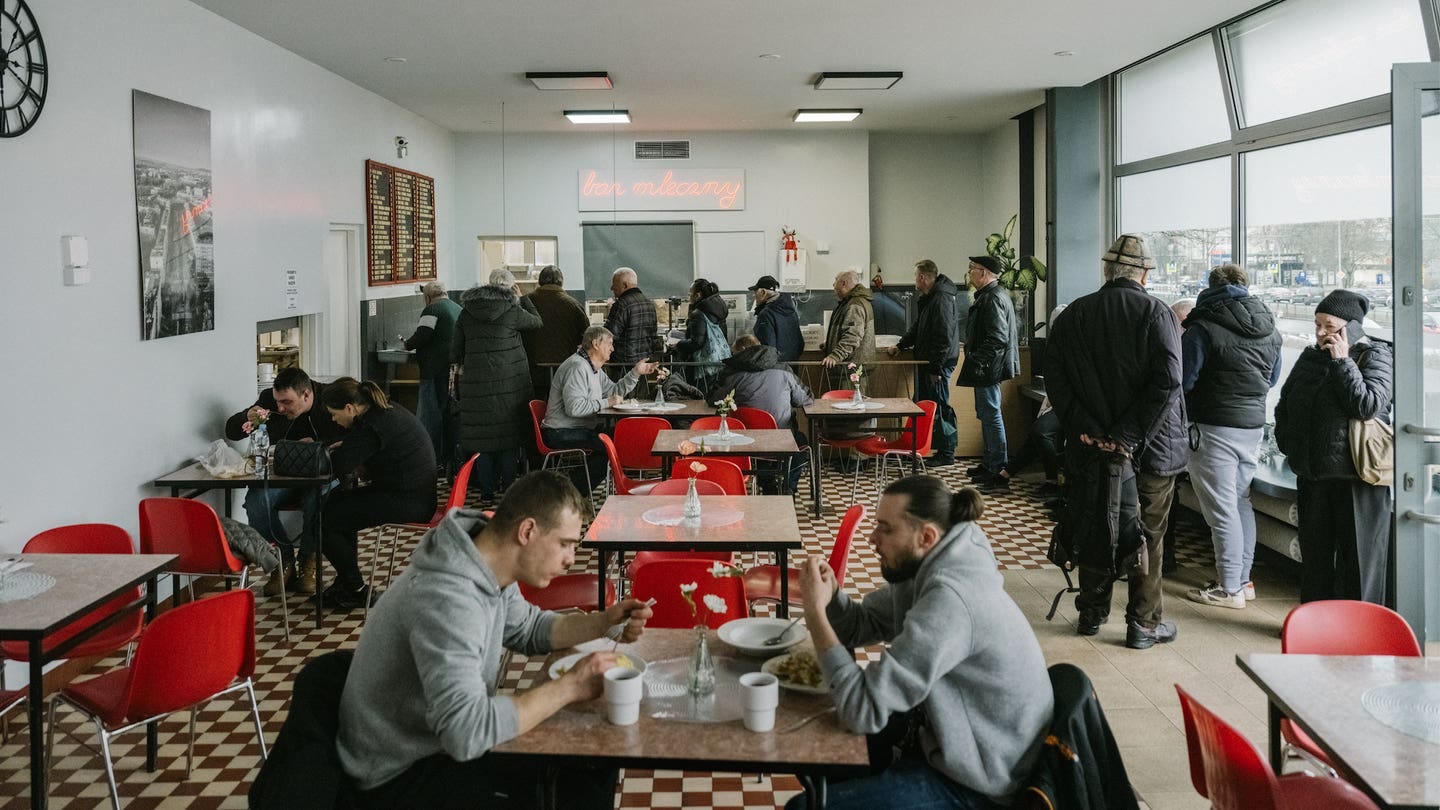
Poland’s milk bars have been feeding Poles since 1892. At their peak there were forty thousand bary mleczne across the country. Today around a hundred remain, through a public-private model: privately operated, with certain key ingredients still subsidized by the state. The clientele is diverse — workers, students, retirees, people from different walks of life eating side by side — offering delicious beetroot soups, pierogis, potato cakes.
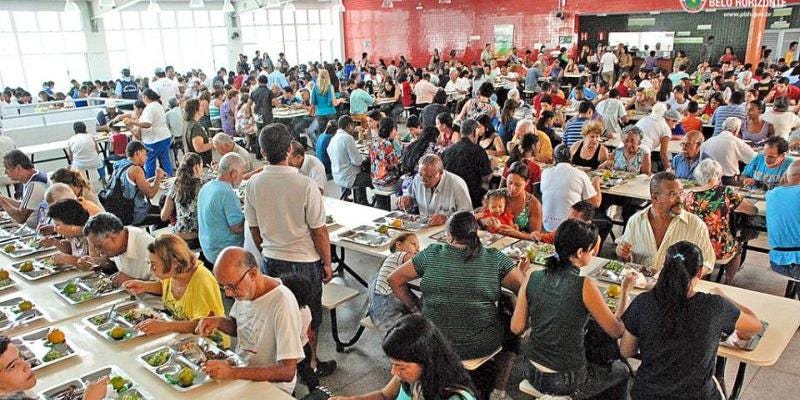
Brazil’s Restaurantes Populares — People’s Restaurants — were first launched in Belo Horizonte in the 1990s and later adopted as a federal strategy under the Zero Hunger program in 2003, spreading to cities across the country. There are now more than a thousand of them, run by local governments with subsidies at multiple levels of the state, serving nutritious traditional meals — often sourced from local smallholder and agroecological farmers.
In Turkey, since 2019, nine municipalities have opened people’s restaurants — Halk Lokantası or Kent Lokantası — with fixed daily menus of homestyle dishes: lentil soup, roasted lamb, bulgur pilav. They are publicly owned and run by local governments.
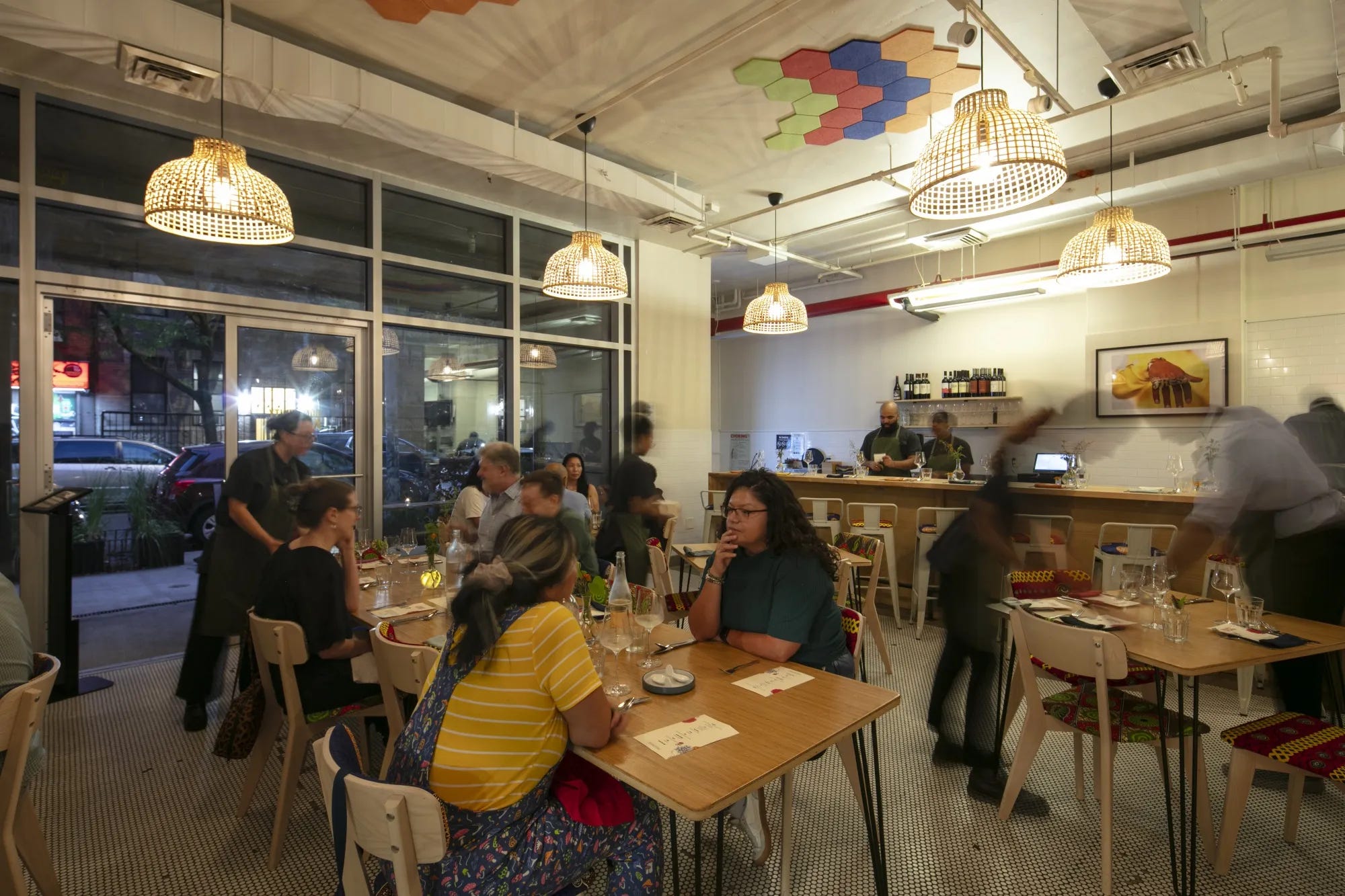
In Mexico City, the Comedores Comunitarios para el Bienestar — Community Dining Halls for Well-Being — have offered subsidized canteen meals in underserved neighborhoods for years. India has its public canteens. And in New York City, food journalist Mark Bittman has been running Community Kitchen: a not-for-profit restaurant on a sliding scale, backed by philanthropy, offering what The New Yorker described as “elegant and refined” food alongside natural wines, on a pay-what-you-can model. It ran as a pilot last year, with plans to become permanent. New York is also opening public grocery stores.
The question of who is responsible for feeding people — and how — is back on the table. Nourish Scotland has been making the most rigorous case for public restaurants in the UK (and increasingly beyond i) — and Abigail McCall has helped bring that work into wider food-systems conversations, engaging many of us thinking about public restaurants as part of the food infrastructure we need. Their argument is straightforward: food needs public infrastructure, just as transport, healthcare, and education do. We build hospitals because the market alone does not guarantee health. We build schools because access to education cannot depend on what families can afford. We build public libraries, public parks, public transit. Why not public restaurants?
Food is as essential as any of these — more so, arguably, since we need it three times a day. And yet we largely leave its provision to market forces that have consistently failed to make healthy, sustainable, delicious food accessible and affordable to everyone.

In Peru, proposing this would sound almost preposterous. Or at least, my more neoliberal colleagues would treat it that way. In much of Latin America — and in many countries well beyond it — any mention of greater state involvement in the economy is met with a familiar set of accusations, a product of deep political polarization. If you argue for state support for healthy food: “communist”. If you want to fight climate change through regulation: “green communist”. If you believe in gender equality and minority rights: “woke communist”. If you think the state should be democratic and functional: “caviar communist”.
It is true that some of the most successful public restaurant models expanded during socialist or communist administrations — the Polish milk bars being the obvious example. But a functional public restaurant is entirely compatible with social democracy, capitalism, or any political system that accepts a state role in guaranteeing basic rights.
In fact, public food infrastructure already exists — through school meal programs, breakfast programs, emergency food relief, food stamps, and state support for community kitchens. Communities have also long organized to feed themselves, with or without the state.
However, this is not emergency food, nor charity. It does not compete with private restaurants. It is something more like what a public park is to real estate: not a substitute, but a complement — permanent, dignified, accessible to everyone.
And if you prefer to frame it in terms of efficiency rather than rights: unhealthy diets cost billions in healthcare spending every year. Malnourished children learn less and earn less. And though this argument strikes me as overly productivist, I’ll leave it here anyway: workers who cannot afford a decent lunch are less productive. And market forces have not aligned profit with population wellbeing when it comes to food. The food industry has been extraordinarily effective at making ultraprocessed, nutrient-poor food cheap, convenient, and omnipresent. Making nutritious, sustainable food affordable has been far less of a priority. That’s not a moral failure of the market — it’s how markets work.
Public restaurants are one tool in a much larger set of policies to improve food environments — alongside front-of-package labeling, taxes on ultraprocessed foods, subsidies for fresh produce, stronger school feeding programs. All of this can work together, with public restaurants anchoring a procurement system that sources from smallholder farmers and supports an agroecological transition. What public restaurants add is a physical space where good food is not a privilege.

The case for public restaurants goes well beyond nutrition and health.
In terms of affordability, public restaurants can lower prices through state investment, procurement at scale, and a mission that is not profit but access.
On sustainability: public restaurants, designed well, can be major purchasers of local, agroecological, seasonal produce — including native crops and underutilized species that supermarkets won’t consider, but that are often more diverse, resilient, and nutritious.
On employment and dignity: run well, these restaurants can offer decent, formal work to people currently in informal, precarious labor — drawing on the extraordinary culinary talent that already exists. They can also serve as sites of training and skills development, providing pathways out of precarity for some of the most talented and invisible people in our food systems.
Then there is taste and pleasure — which matter more than food policy discussions usually admit. The goal should be a public restaurant that serves food people actually want to eat: delicious meals shaped by chefs who bring creativity and craft to the mission. Taste shapes what people expect from every meal, and experience can change food culture far more deeply than any public health awareness campaign.
Healthy, sustainable, delicious food should also have a democratizing effect — not the exclusive domain of those who can afford a tasting menu in a fancy restaurant.
And public food infrastructure is, in part, a redistribution of care: the labor of feeding people, which has historically fallen on women regardless of whether they also work, raise children, and manage everything else. The entry of women into the formal workforce was never accompanied by any serious rethinking of who feeds the household.
And yet, the challenges of building this infrastructure are real and worth naming.
Public restaurants are expensive to build and run. But so are hospitals, schools and public transport. The argument that public goods generate returns — in health, equity, social cohesion — that market-only systems fail to capture is one we’ve already accepted for those domains. The question is whether we’re willing to apply it to food.
The state, especially across much of the Global South — and in many countries of the Global North after decades of neoliberal hollowing — is often too weak, underfunded, or captured to run programs like this effectively. But a weak state is not an argument for no state. It is an argument for building a better one. The answer is reform, not retreat — the same logic we apply to health and education.
Then there’s the risk of corruption in procurement — one of the most real dangers in any public food program. The answer is accountability: involving civil society and communities in oversight; making procurement transparent; building partnerships that create genuine checks on the system.
And perhaps the most personal objection: can the state actually produce something worth eating? In Peru in the 1980s, the government was producing powdered milk that smelled and tasted like rotten eggs, and a “popular bread” that was possibly the most effective method for making people stop eating flour. These failures are real, and they matter. The answer is to put taste at the center of policy. A public restaurant that serves great food is its own best argument.
There is one more dimension worth naming: what it means to eat together.
One of the things that strikes you about Poland’s milk bars or Turkey’s people’s restaurants is that they are genuinely diverse. People who would never otherwise share a table — different ages, incomes, occupations, neighborhoods — find themselves eating side by side. In deeply unequal societies, a restaurant that is genuinely accessible to everyone, that offers food worth wanting, is a rare and powerful social equalizer.
Some Mexico City restaurants have done pay-what-you-can evenings, a few days a year, as a gesture toward a city being reshaped by gentrification. The gesture is welcome. But public restaurants propose something more structural: that access to healthy, delicious food should not depend on the generosity of any particular restaurant.
None of this looks the same everywhere. The public restaurant model is most applicable where the state already takes responsibility for health and education — much of Europe, where there is broad consensus about the state’s essential role, and a few places in Latin America or Asia with a stronger tradition of public responsibility. In countries like the United States, which has never managed to guarantee universal healthcare, the path is longer — though New York’s public grocery stores suggest the conversation is at least beginning.
In much of the developing world, the picture is more complex — and more urgent. Food insecurity is not a background condition but an everyday reality for hundreds of millions of people. At the same time, informal food systems play an enormous role in daily feeding: vendors, markets, and street stalls — run overwhelmingly by women — already provide affordable meals to large portions of urban populations, often without any formal support, infrastructure, or recognition.
The argument for public restaurants in these contexts is not to ignore what already works, nor to build a top-down system that competes with or displaces it. It is to invest in the surrounding infrastructure: better market facilities, cold storage, reliable water access, fair public procurement that includes informal actors, and legal recognition that protects rather than criminalizes. Public restaurants could be one node in a broader ecosystem of public food infrastructure — partnering with and employing the informal cooks and vendors who already know how to feed their communities, giving them stable work and the conditions to do what they already do, better.
During the Second World War, the British Ministry of Food established a network of “British Restaurants” — communal feeding centres, initially for the working poor, expanded as wartime hardship spread to a much broader public. At their peak there were thousands of them across the country, serving cheap, nourishing meals to whoever needed them.
The vision here is not emergency infrastructure. It is the opposite: permanent infrastructure, built for normal times. But the scale of what we face is not so distant from an emergency. Malnutrition in all its forms — undernutrition, anemia, overweight, obesity — is growing. Healthy diets are out of reach for billions. Climate change is reducing yields, particularly where people can least afford it. Geopolitical instability is pushing up the price of basic staples. The food system is under extraordinary stress — and it will get worse as climate change deepens and instability grows. This is precisely the kind of moment that calls for a wartime level of ambition in food policy. We showed, briefly, during COVID, that governments can act at that scale when the urgency feels real.
Public restaurants will not solve all of this. But they are a serious, concrete way to make the Right to Food real. The urgency is there. The models are there to learn from, from Warsaw to Belo Horizonte to Istanbul. What is missing is the political will — and the broader social agreement — to treat food the way we already treat education and health: as something too fundamental to be left entirely to the market.
As someone who spends a lot of time writing about restaurants, I love the idea that good food shouldn't be reserved for people who can afford a tasting menu.
Some of my most memorable meals have been humble, communal, and accessible. Taste (and dignity) shouldn't be luxury goods.
As someone who writes about food law, I found this fascinating. It raises important questions about the role of public institutions in shaping not just access to food, but the experience of eating together.